
CERES TAG's CERES GEN6 livestock monitor has won a 2026 Australian Good Design Award in the Product category. Congratulations to the CERES TAG team and to Clandestine Design Group, who designed the tag with them.
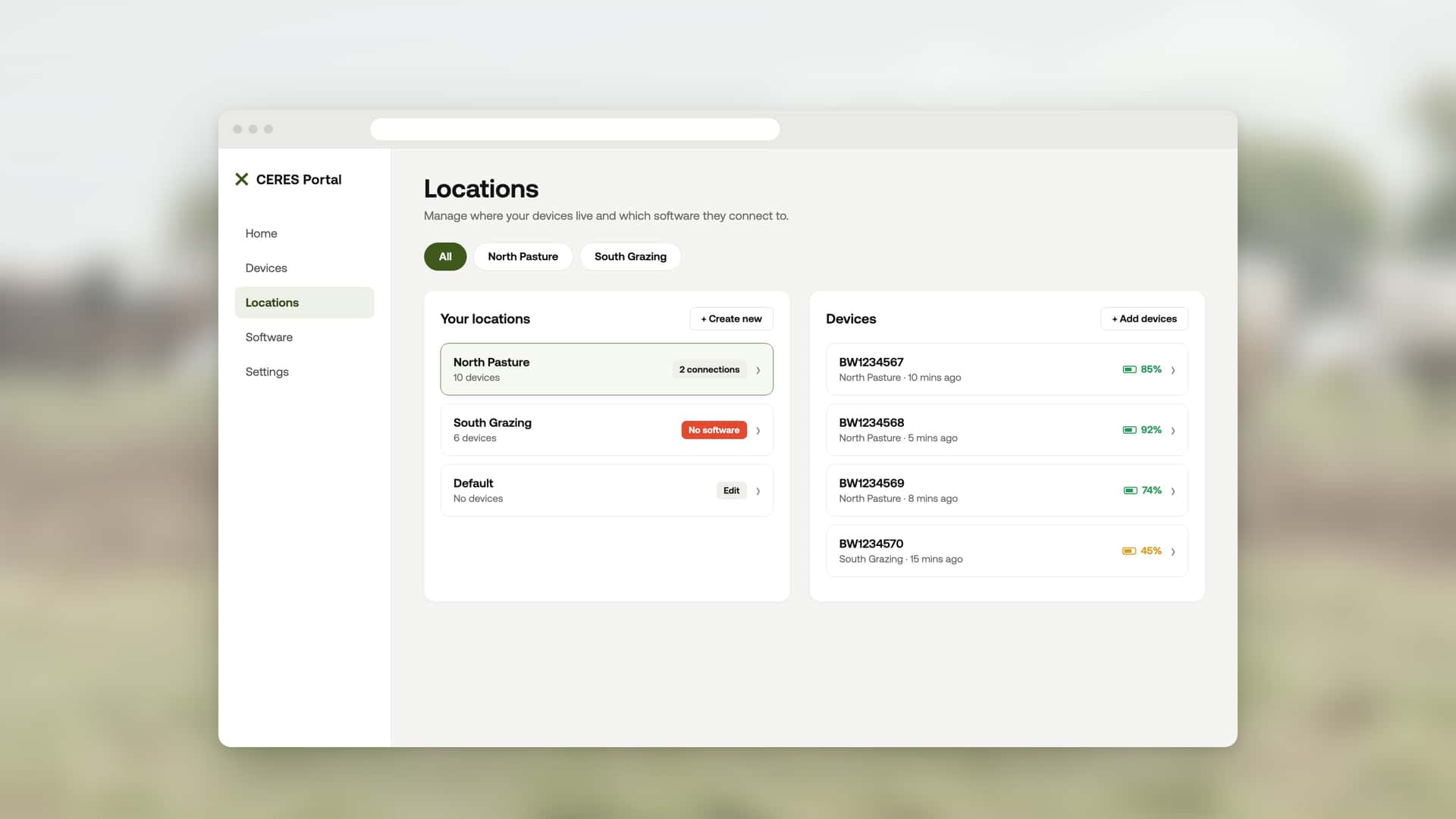
We did not design the tag. We designed and built the web version of the new CERES Portal, including the experience a farmer goes through to register it. That distinction is the point of this post.
What a farmer actually buys
A farmer buys more than just an ear tag. They buy the ability to know where their cattle are and how they are doing, from anywhere, without a base station or mobile coverage. The tag is the most visible part of that. It is not the whole of it.
Between the box arriving and the first useful data point there is a set of steps. Register the devices. Put them against the right property and paddock. Confirm they are reporting. Connect the software you use to run the farm. If any of those steps is confusing, the product has failed, no matter how good the hardware is.
The hardware got simpler. The setup had to match.
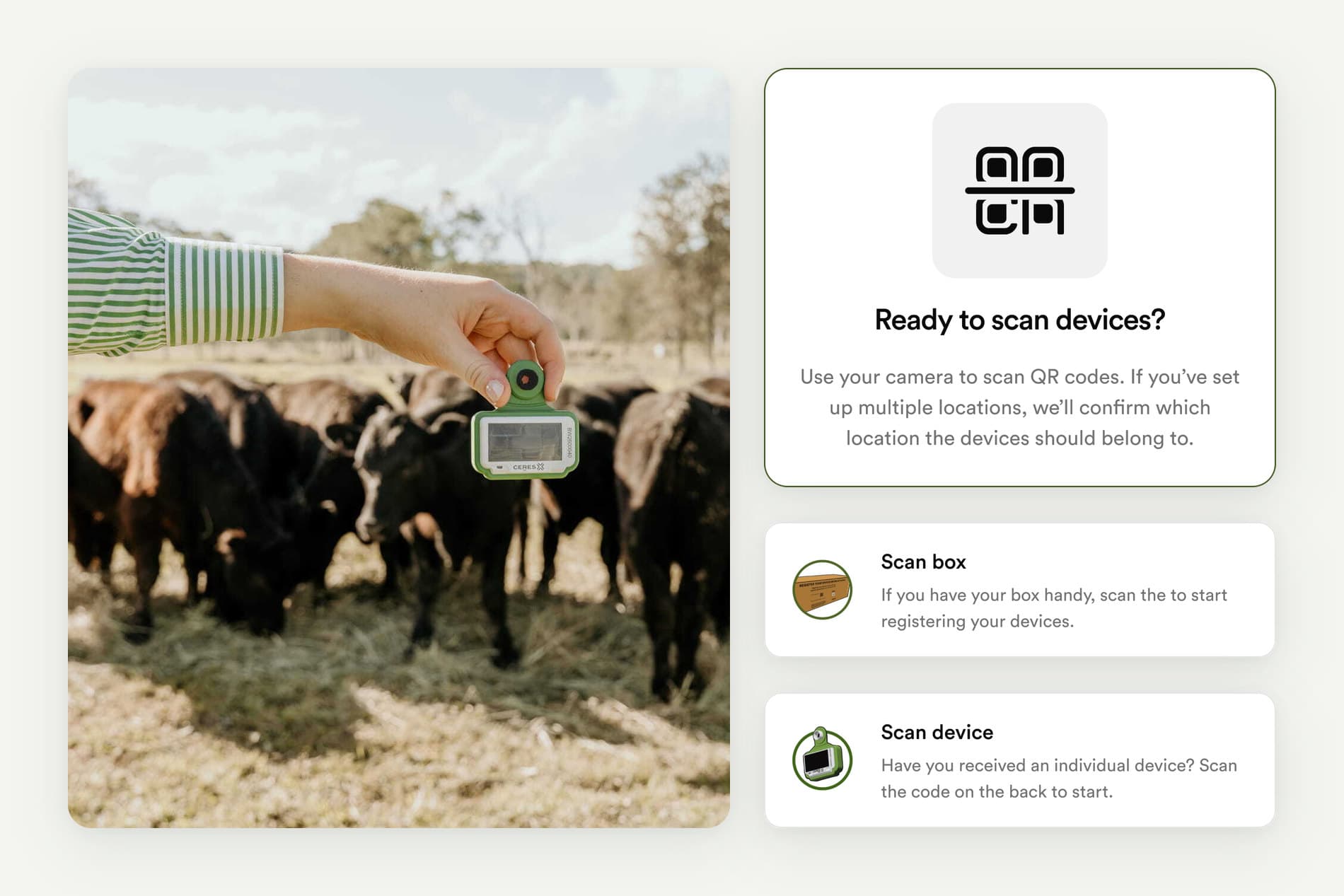
CERES GEN6 activates itself. Once it is charged and on the animal, it detects the attachment and starts working. CERES TAG removed a manual step from the farmer's job entirely.
That is a UX decision made in plastic and firmware. It would be strange to make that call on the device and then hand the farmer a registration process that feels like filling in a tax return.
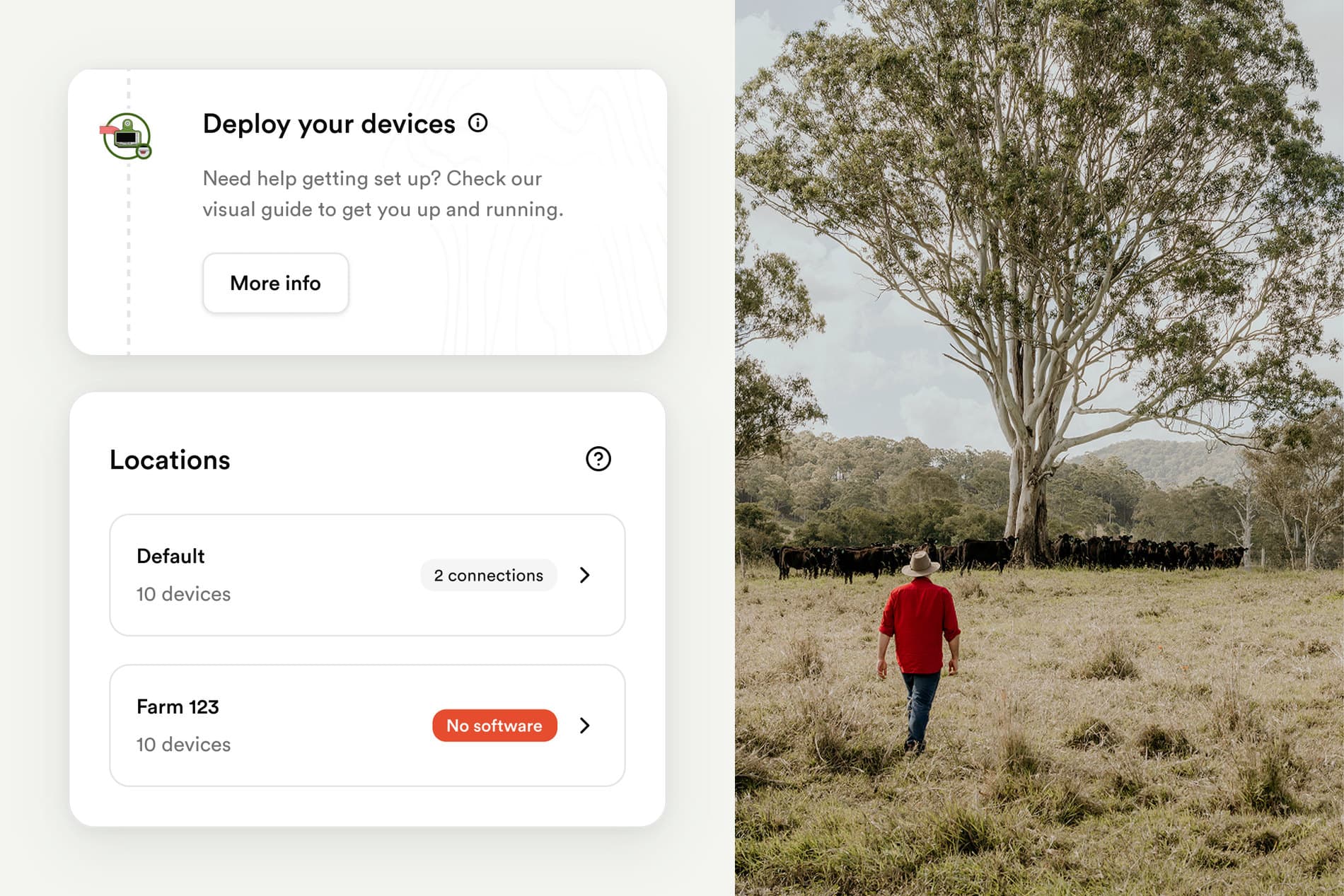
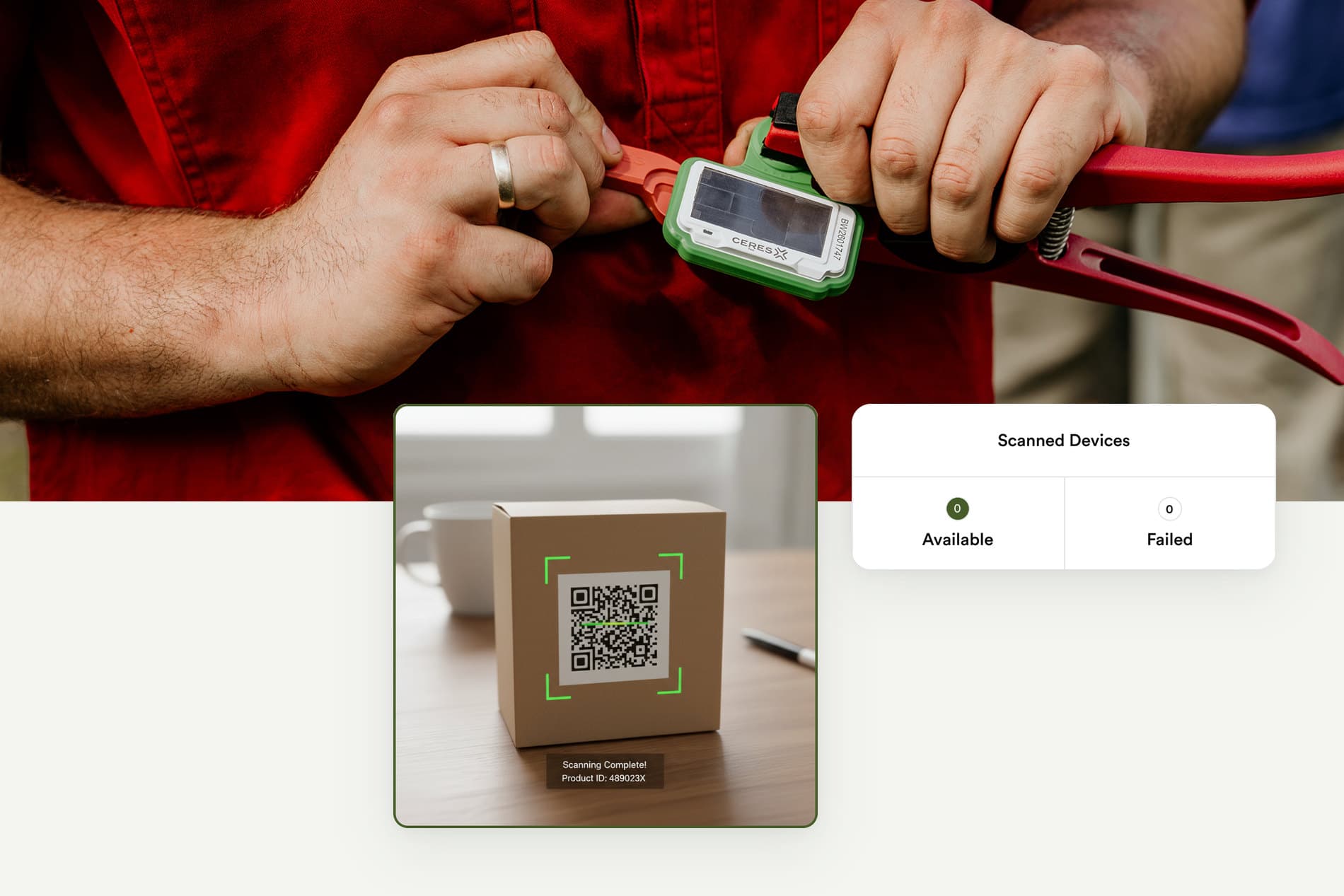
So the new CERES Portal follows the same idea: a fresh look and a smooth registration flow. Add a whole box at once, or add a single tag. Confirm where the devices belong before anything is committed. Every device shows a plain state: reporting, low on battery, or needing attention. When a tag is already registered to another account, the flow explains what happened and what to do next, rather than ending in a support call.
Designing for farmers, not an office
The people using this run farms, not IT departments. They want setup done and back to work. That changes the work. Clear targets. Fewer decisions per screen. No step that relies on remembering something from three screens ago.
A setup that only makes sense to the people who built it is not a working setup.
Why this matters beyond agtech
Most products are judged by the part that is easiest to photograph. The device, the dashboard, the hero screen. Customers judge them by the first ten minutes. If those minutes are painful, the support team pays for it, the sales team pays for it in churn, and the product gets a reputation it did not earn.
Good UX is not decoration on top of a finished product. It is part of the product. For CERES TAG it is the difference between a great tag in a drawer and a great tag on an animal, sending data.
You can read how we approached it in the CERES TAG case study. If you have a product whose first ten minutes are losing people, talk to us.