
On 10/08/2026, Premier Peter Malinauskas announced a Royal Commission into Artificial Intelligence — the first anywhere in Australia. It sits on a $3 million budget, will be run by three commissioners chosen through an international search, starts on 01/10/2026 and reports by 01/07/2027.
That is nine months of hearings into how AI is used in this state, and most of the businesses that will be affected by the outcome have not read a word about it yet.
The short version
- Announced: 10/08/2026 by Premier Peter Malinauskas, after a US trip meeting OpenAI, Anthropic and Apple
- Runs: 01/10/2026 to 01/07/2027, on a $3 million budget, under three commissioners
- Covers: education, skills and work, health and public services, creative industries, and infrastructure
- Excludes: data centres, deliberately — the focus is how AI is used, not where it is housed
- Real powers: it can summon witnesses and compel documents under the Royal Commissions Act 1917 (SA)
- Why it matters: its recommendations set the standard your clients and procurement teams will ask about
What was actually announced
The final terms of reference are due roughly four to six weeks after the announcement — so late September, days before the Commission opens. What the government has signalled so far is education, skills and work, health and public services, creative industries, and the infrastructure underneath all of it.
What is deliberately left out is just as telling. Data centres are excluded. The Premier's line was that how the technology is used in society matters far more than where a data centre gets built. That is the opposite of the federal focus: the Commonwealth's flagged 2027 AI legislation is aimed mainly at data centres and copyright. South Australia is inquiring into the part nobody else is regulating yet — the part you are using.
The announcement followed a trip to the US where the Premier met OpenAI, Anthropic and Apple, and invited them to take part.
A Royal Commission is not a review
This is the distinction most coverage skips. Under the Royal Commissions Act 1917 (SA), a commissioner can summons witnesses and compel the production of documents. Refusing to be sworn, refusing to produce records, or refusing to answer a lawful question carries a penalty of up to $1,000 or up to three months' gaol, and a witness who ignores a summons can be brought in on a warrant.
Not every business will be called. But the standard of evidence set in those hearings — what a well-run AI deployment looks like, what records an organisation should be able to produce — is what the recommendations will be built on. And Royal Commission recommendations have a habit of turning into law.
It is also not the state's first pass at this. A parliamentary select committee, running since 2023, already reported on AI across energy and mining, education, agriculture, manufacturing, legal services and health, with 15 recommendations — most of them urging South Australia to push for consistent national laws. Opposition Leader Ashton Hurn has used exactly that to question the spend. The Premier's answer was that $3 million is chicken feed against the cost of getting the transition wrong.

Why it lands on you
Read the scope list and it is easy to decide none of it is yours. Look again.
If you sell into government, health, education or a supply chain that does, whatever standard comes out of this becomes a procurement question you have to answer in writing. If you use AI to screen candidates, roster staff, or make any call that affects someone's work, the employment and skills stream is about you directly. If you are in a creative or professional services field, the question of what was generated and what was made is already being asked by your clients. And if your staff are running company data through free chatbot accounts nobody approved, you have an exposure you have not measured, sitting on someone else's servers, under someone else's terms.
What to do before October
There is a short window, and the work is not complicated.
Write down every place AI is used in the business, including the tools nobody signed off on. For each one, note what data goes in, where that data ends up, and whether it trains someone else's model. Name one person accountable for each. Check what your contracts and your insurer already say about automated decisions — most policies written before 2024 say nothing, which is its own answer. Then decide which of those uses you would be comfortable explaining to a regulator, a client, or a journalist, and fix the ones you would not.
That list takes an afternoon. Not having it in twelve months' time will cost considerably more than an afternoon.
Governance is not the brake
Not everyone thinks a nine-month inquiry is the right instrument. Dr Rebecca Johnson at the University of Sydney has warned it risks spending a year rediscovering that AI creates risks to jobs, privacy, security and accountability — things we already know. Professor Toby Walsh at UNSW takes the other view: if it makes government move faster, good.
Either way, the argument is about the pace of regulation, not its direction. The businesses that come out of this ahead will not be the ones that paused. They will be the ones who can show their working — what the system does, why it was built that way, and who signed off. That turns into a procurement advantage the moment a competitor is asked the same question and cannot answer it.
That is the standard we build to. When we put AI into a business, we assume someone will eventually ask it to justify itself — a client, a procurement officer, or a commissioner — and we build so that question has an answer.
Hearings start 01/10/2026. The report lands by 01/07/2027. The businesses that can answer questions about their own systems will be fine. The rest will spend that year catching up.
Sources
- Royal Commission into Artificial Intelligence announced — Department of the Premier and Cabinet, SA
- SA's AI royal commission is genuinely novel — but critics have warned of glitches — ABC News
- South Australia announces AI royal commission — Information Age, ACS
- South Australia announces Royal Commission into AI — Gadens
- Royal Commissions Act 1917 (SA) — South Australian Legislation, and what a royal commission can do — SA Law Handbook
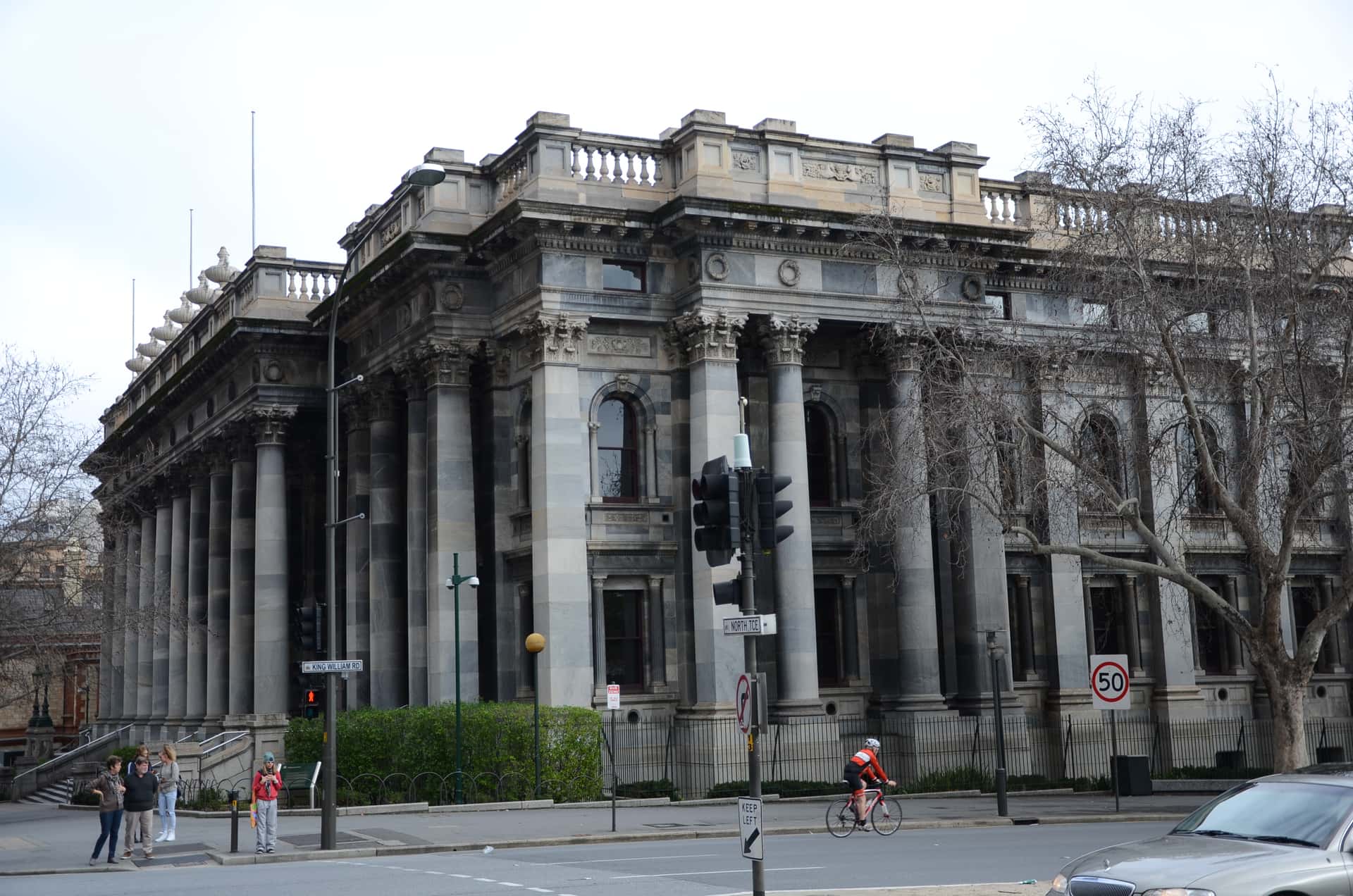
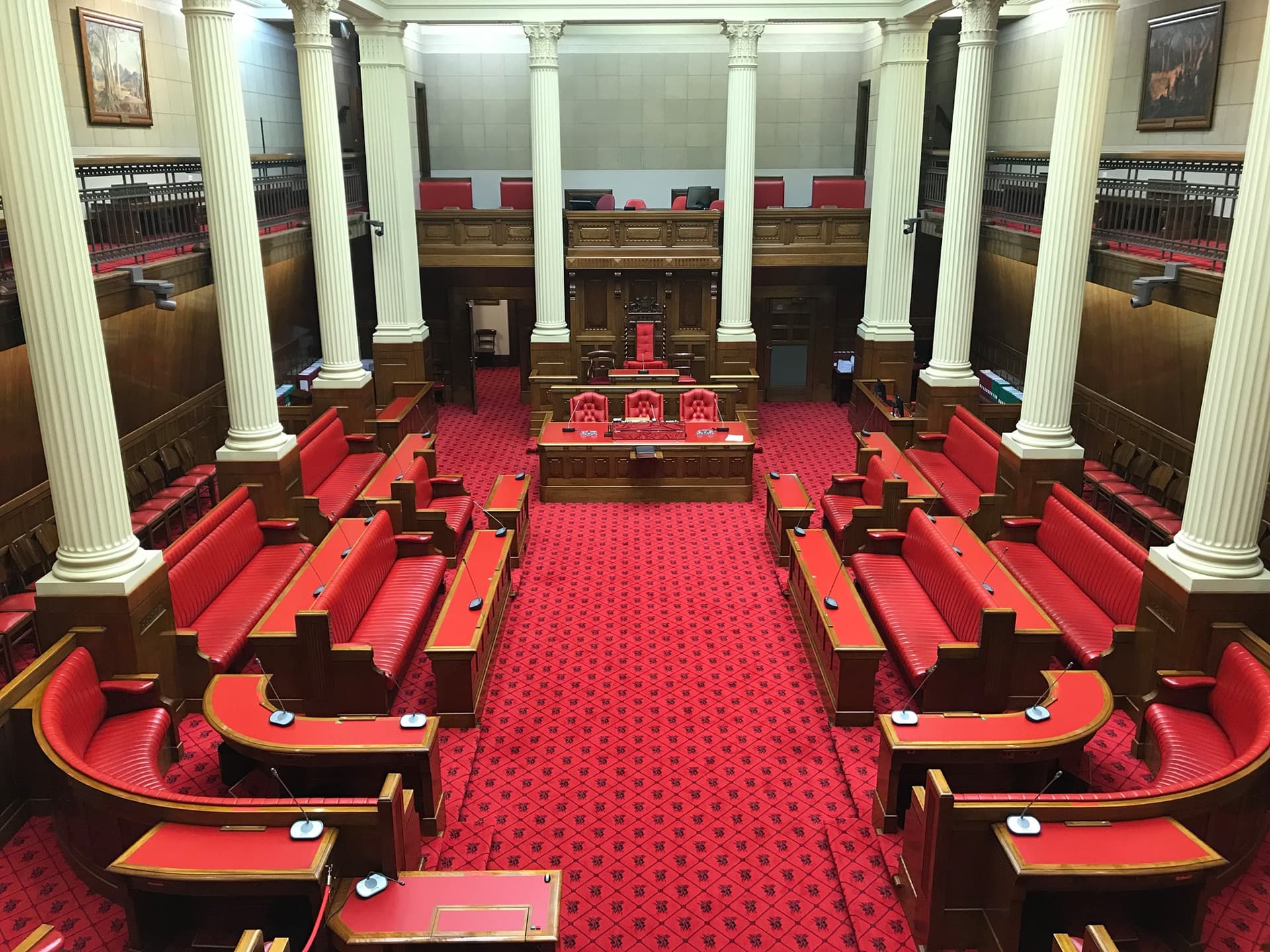
Header image: Parliament House, Adelaide, photographed by John Jennings, via Wikimedia Commons, used under CC BY-SA 2.0. Legislative Council chamber: Parliament of South Australia, via Wikimedia Commons, used under CC BY-SA 4.0. All other photography by CodeFish Studio.